Italian Gestures: Speaking with the Hands
When we think of Italy, images of sun-drenched piazzas, delicious food, and breathtaking art naturally come to mind. Yet there is another defining element that shapes everyday Italian life: gestures. For Italians, gestures are far more than simple body movements; they are an expressive language of their own, reflecting emotions, thoughts, and cultural identity. In many situations, the Italian gestures are just as meaningful as spoken words—sometimes even more.
For anyone learning Italian, understanding these gestures provides a deeper connection to the culture and enhances communication. But where do these globally recognized gestures come from, and how are they used in daily life?
 A Historical Habit: When Hands Speak
The Italian tradition of expressive hand gestures reaches back to ancient Rome. Public speaking, theatre, and political gatherings often relied on emphatic body language to convey emotion and persuade audiences. Over centuries, Italy became a crossroads for various cultures—Greek, Arab, Spanish and more—each leaving its mark on local communication styles. The result is a rich, diverse system of gestures that continues to thrive today.
Iconic Italian Gestures and Their Meanings
“Ma che vuoi?” — “What do you want?”
Perhaps the most famous Italian gesture of all: fingers bunched together and moved up and down. It expresses confusion, disbelief, or a need for clarification—perfect for moments when someone makes little sense.
The Chin Flick — “I don’t care.”
Sliding the fingers forward from under the chin, this gesture conveys indifference or dismissiveness. It often carries a playful or slightly sarcastic tone.
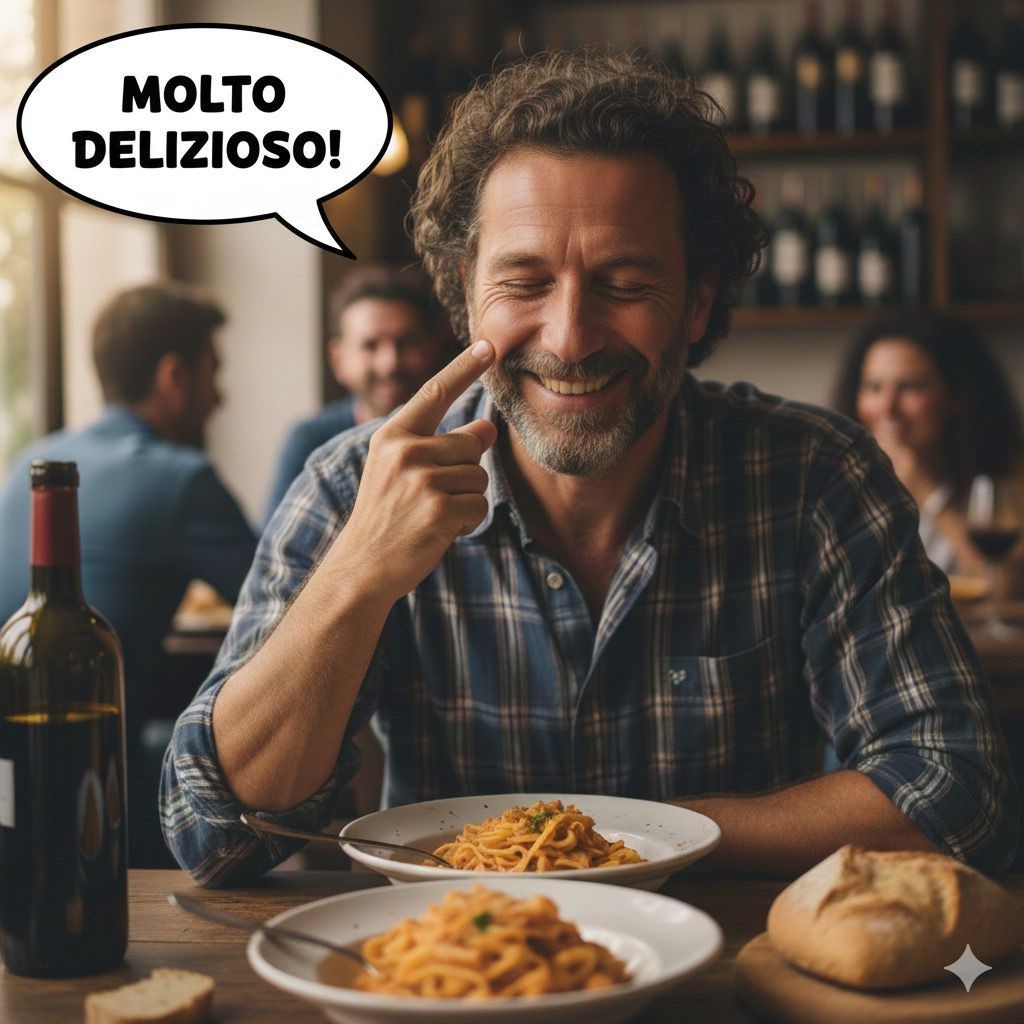
Fingers to the Lips — “Delicious!” or “Perfect!”
Reminiscent of a chef’s kiss, this gesture celebrates something wonderful—a meal, a view, or an accomplishment.
Wrist-Twisting — “Come on!”
A rotating motion of the hand that signals impatience, disagreement, or that something is hard to believe.
Finger Snap + Hand Wave — “Hurry up!”
A gesture that expresses urgency, commonly used in lively conversations or bustling daily routines.
 Why Gestures Matter So Much
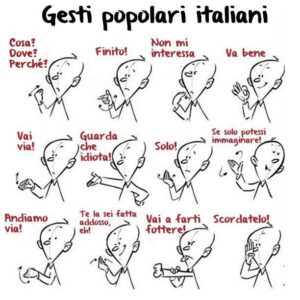
In Italy, gestures are not mere embellishments to speech—they are an essential part of communication. Some studies even suggest that Italians use more than 250 distinct gestures in everyday conversation. These gestures:
• Enhance emotional expression
• Reinforce spoken words
• Replace verbal language altogether in some situations
• Reflect cultural belonging and identity
Understanding them allows learners to connect more naturally and authentically with Italian speakers.
If you want to learn moreabout Italian culture and Italian typical expressions, take a look at this web page!


